Think of search visibility like shelf space in a supermarket. When a potential customer walks down the aisle looking for a product, they can only buy what they can see. If your competitors are on the shelf and you are not, it does not matter how good your product or service is. That customer is going home with someone else’s solution, and they may never even know you existed.
A keyword gap analysis is how you find out where that is happening to your business online.
At its core, it is a structured comparison between your website’s search visibility and that of your competitors. Each element of that comparison reveals a different type of opportunity, and understanding the distinction is key to making the analysis actionable.
Keywords you share with competitors indicate where you are already competing for the same audience but may be losing ground. Both websites are visible for the same search terms, but your competitor may be ranking significantly higher, capturing the majority of clicks. These represent your most immediate optimization opportunities.
Keywords where competitors rank higher than you highlight where the gap is actively costing you traffic and potential revenue. Analysing which pages your competitors are using to rank for these terms provides valuable intelligence about their content strategy and where they are concentrating their efforts.
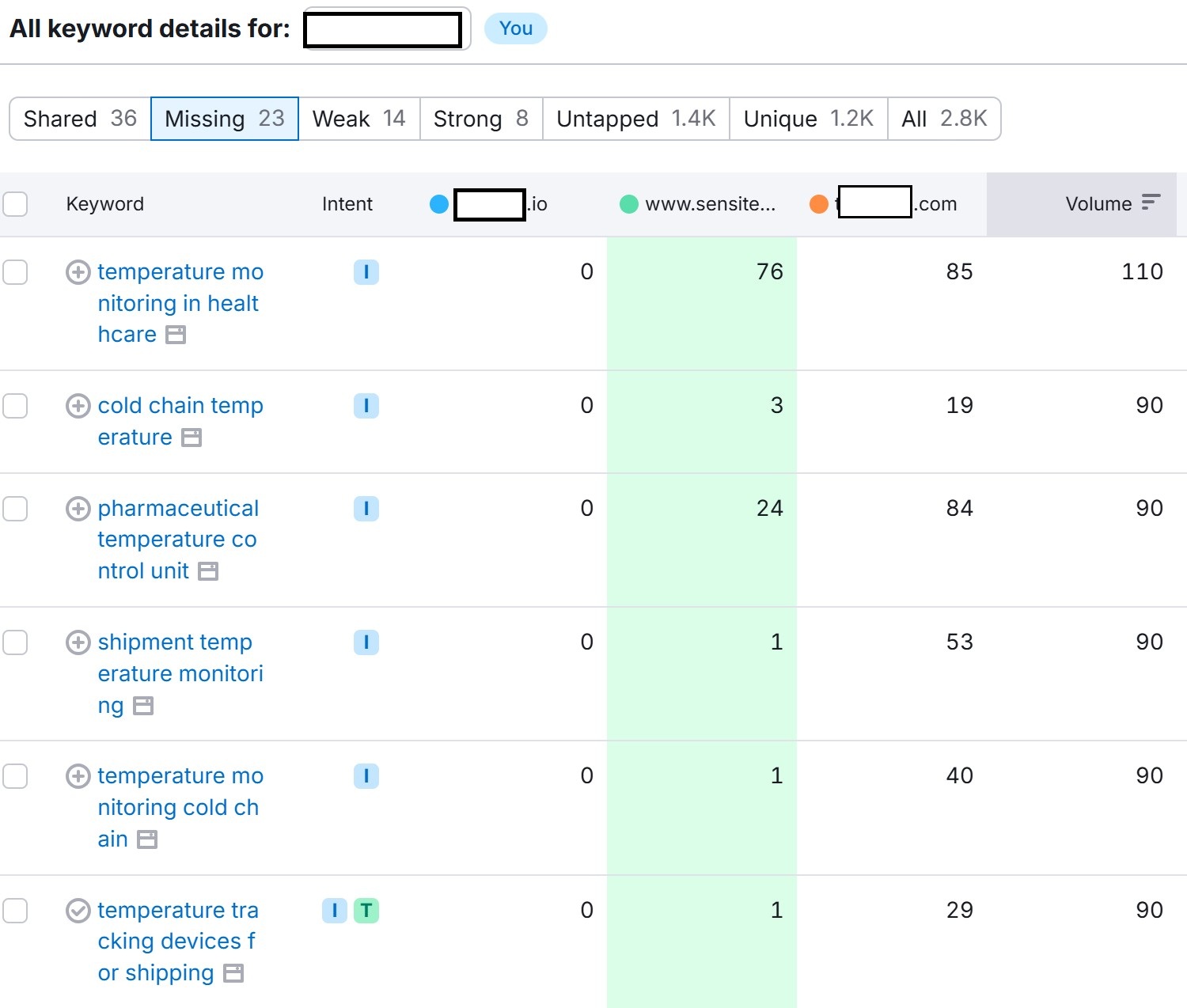
Keywords where you are entirely absent are often the most strategically significant. These are conversations happening in your market that your business is not part of at all. They can reveal unmet demand, emerging topics, or new areas a competitor is quietly moving into before making any public announcement.
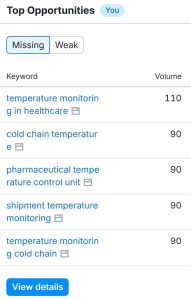
The business reality is straightforward: every time a potential customer searches for something relevant to your business and a competitor appears in the results while you do not, that is not a neutral outcome. That customer is forming opinions, building a shortlist, and making decisions without you in consideration.
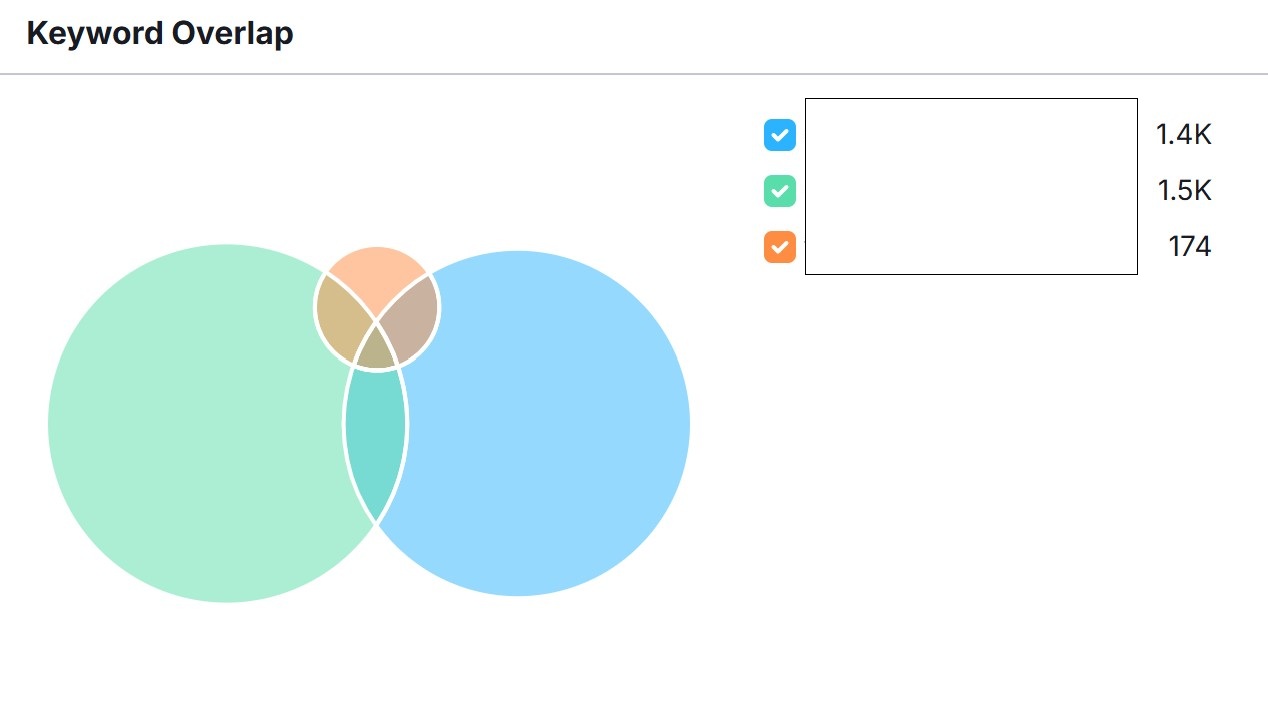
Several professional tools are available for conducting a competitor keyword gap analysis. The most widely used and reliable options include:
SEMrush is one of the most comprehensive platforms available, offering a dedicated keyword gap tool that allows you to compare up to five domains simultaneously. It provides detailed data on keyword overlaps, ranking positions, and traffic estimates.
Ahrefs is particularly strong for backlink analysis alongside keyword data, making it a good choice when you want to understand both the content and authority dimensions of a competitor’s performance.
Sistrix is especially popular in European markets and offers strong visibility index data, making it useful for tracking market share trends over time.
The choice of tool will depend on your market, budget, and specific needs. What matters far more than the tool itself, however, is what you do with the data it produces.
Step 1: Identify Your Real Competitors
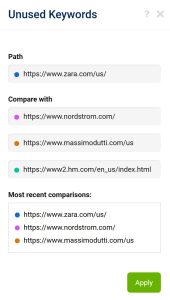
The starting point is not always who you think your competitors are. Google’s view of your competitive landscape can differ significantly from your own, and that difference is often revealing. Using a tool like SEMrush or Ahrefs, you can identify which websites are ranking for the same keywords as yours. This exercise frequently surfaces competitors that were not previously on your radar, as well as websites competing for your audience from unexpected angles.
Step 2: Run the Gap Analysis and Extract the Data
Once your competitor list is defined, you run the gap analysis within your chosen tool. The focus should be on three data points: keywords where competitors rank and you do not, keywords where competitors rank significantly higher than you, and the specific pages they are using to achieve those rankings.
Step 3: Categorise by Opportunity Type
Not every gap represents an equally valuable opportunity, and attempting to address everything at once leads to unfocused execution. A practical approach is to segment findings into four categories: quick wins with low competition that can be acted on immediately, content gaps where topics are simply not being covered on your website, optimization opportunities where existing pages need improvement rather than new content, and strategic signals where competitor activity hints at market trends worth monitoring.
Step 4: Map Findings to Business Outcomes
This is the step that elevates a keyword gap analysis from an SEO task to a genuine business intelligence exercise. For each significant finding, the question to ask is what it means in business terms. Does a particular gap represent a revenue opportunity? Does a competitor’s content pattern suggest they are preparing to enter a new product or service area? Is there unmet demand that your business could be the first to serve? These are the conversations that turn data into strategy.
Step 5: Build a Cross-Functional Action Plan
The findings from a competitor keyword gap analysis should not remain within the SEO team. The insights are relevant to content, marketing, product development, and business development. Sharing the findings with the right stakeholders and building a coordinated action plan significantly multiplies the value of the analysis.
The following example illustrates the kind of outcome a well-executed competitor keyword gap analysis can produce.
During an engagement with a company providing insurance products for Amazon sellers in the US market, a competitor keyword gap analysis revealed that one of their main competitors was generating the vast majority of their organic search traffic from a single article. It was what I would describe as a golden keyword opportunity, a case I had not encountered before in quite that form. One article, one tightly defined keyword cluster, driving almost the entirety of a competitor’s organic visibility.
That discovery told us two things immediately. First, the demand for that topic was clearly significant. Second, the competitor’s traffic was concentrated in a way that created a real opening.
The decision was made to produce a more comprehensive piece of content targeting the same topic. The approach focused on stronger technical optimization, including meta tags and heading structure, a broader set of semantically related keywords, and a deliberately informative editorial angle to differentiate from the competitor’s more sales-oriented page.
The results were measurable and clear.
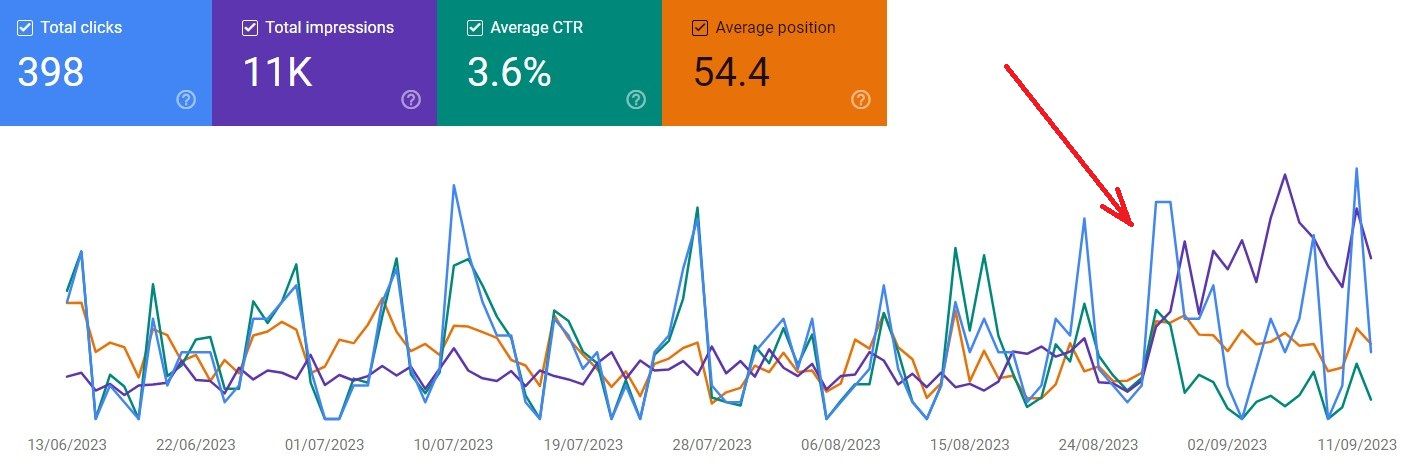
The article generated 398 clicks and 11,000 impressions, with a 3.6% click-through rate and a visible traffic spike beginning in late August. In a niche B2B market like insurance for Amazon sellers, this represented a significant shift in visibility, driven entirely by a single strategic decision informed by a competitor keyword gap analysis.
Work With a Specialist

A competitor keyword gap analysis is only as valuable as the decisions it informs. If your business is ready to move beyond surface-level SEO reporting and start using competitive data to drive real strategic outcomes, I can help.
I work with business owners and marketing teams to conduct in-depth competitor keyword gap analyses, translate the findings into actionable strategies, and implement the changes that move the needle on visibility, traffic, and revenue.
Get in touch to discuss what a competitor keyword gap analysis could reveal for your business.



